Influencity Alternative for Agencies with Influencity Pricing and Competitors Compared
Influencity is an influencer search, CRM and social media suite priced by usage limits. AgencyUGC prices by client instead: $149 a month gives ten brands their own workspace for UGC briefs, matched creators, reports and invoices at your client rate.
The best Influencity alternative for an agency selling UGC videos to several brands is a tool sized by client, not by profile analyses. Influencity lists Discover at $158 a month, Professional at $318 and Business at $1,118, all billed yearly, with Enterprise on quote. AgencyUGC is $49, $149 or $499 a month for 3, 10 or unlimited client workspaces.
Influencity is still the stronger tool if your clients pay you to find influencers by audience data, run outreach sequences and listen to social conversations. If that is the job, keep it, or run both.
$318/mo
Influencity Professional, billed yearly
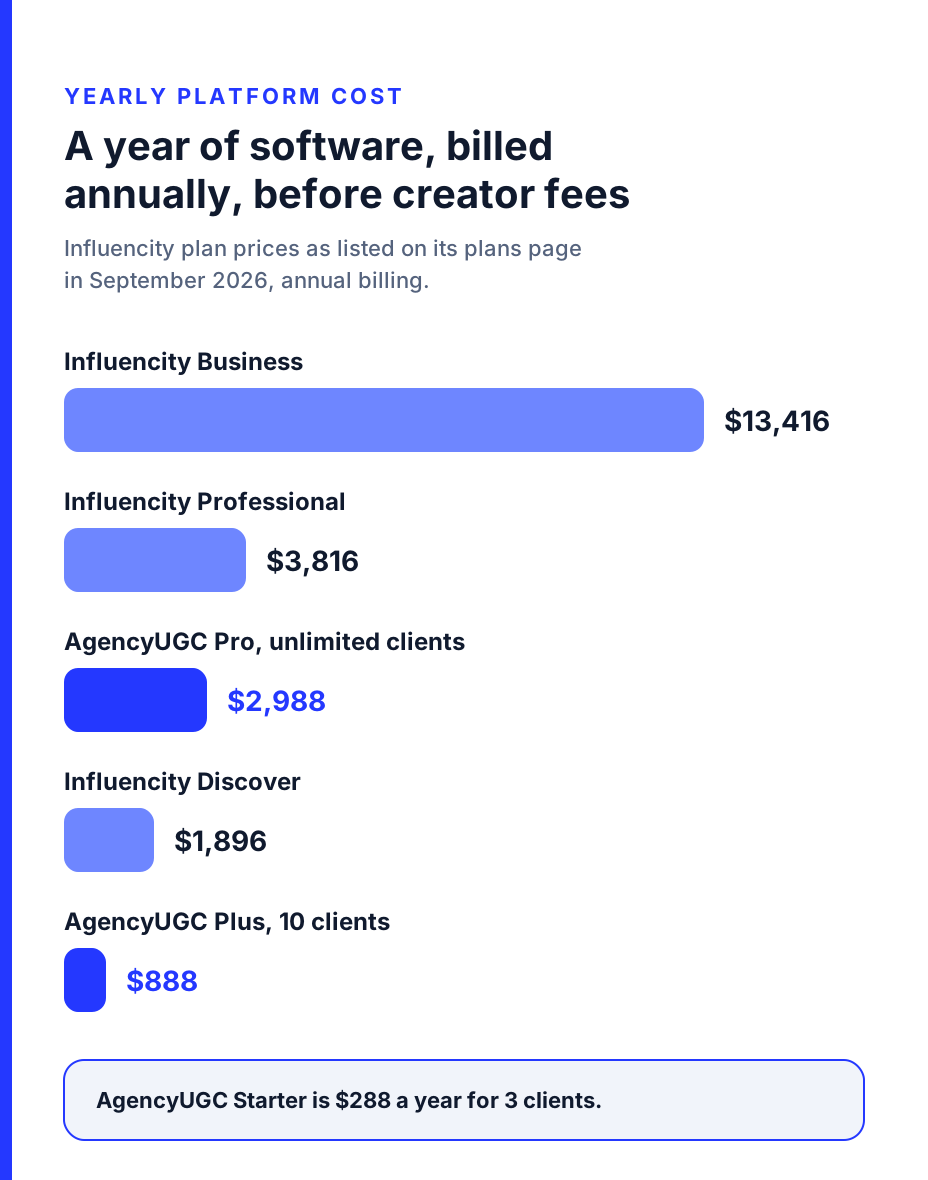
That is $3,816 a year. Influencity Business is $1,118 a month, or $13,416 a year, and Influencity Enterprise is quoted by sales.
7 days
Influencity trial on every plan
Plans carry usage limits on creator analyses, tracked creators and other actions, and you upgrade or talk to sales when a month runs over.
$888/yr
AgencyUGC Plus
Ten client workspaces, per-client dashboards and client invoices at your client rate. $149 month to month.
Influencity plan prices as listed on its plans page in September 2026 (annual billing, recorded by PricingSaaS on September 28, 2026). Product facts read on influencity.com. AgencyUGC prices are our current published plans.
AgencyUGC vs Influencity for an agency producing UGC for several clients
Influencity is a broad influencer marketing and social media platform: discovery across a database of more than 200 million creators, a CRM, outreach, campaigns, payments, seeding, social publishing and listening. AgencyUGC is a narrower tool an agency uses to brief UGC creators and report the work to each client separately. These are the rows an agency owner checks, including the ones Influencity wins.
| AgencyUGC | Influencity | |
|---|---|---|
| Price | $49, $149 or $499 a month, published | Influencity Discover $158, Influencity Professional $318, Influencity Business $1,118 a month billed yearly; Influencity Enterprise on quote |
| What the plan is sized by | Client workspaces, 3, 10 or unlimited | Usage limits such as creator analyses, tracked creators and projects |
| Billing | Month to month, or yearly at $288, $888 or $2,988 | Monthly or annual, annual priced lower; 7-day trial |
| Influencer search by audience data | No database search; vetted creators matched to each brief | Database of 200 million plus creators with audience, engagement and authenticity filters |
| Outreach email sequences | Invite matched creators to a brief | Personalized outreach with open tracking and email sequences |
| Client approval of creator shortlists | Client reports and, on Pro, a client status page behind an access code | Shareable proposal lists clients approve or reject without registering |
| Social media publishing and listening | No | Content planner, social inbox, social ads and social listening |
| Separate workspace per client | Yes, one per brand | Projects and campaigns inside one account |
| Client reports at your rate, never the creator's | Yes, from Starter | Campaign reports on performance data; markup billing not described |
| Client invoices at your client rate | Yes, from Plus | No |
Influencity wins four of these rows outright: audience-data search, outreach sequences, no-login client approval of shortlists, and social publishing and listening. AgencyUGC wins on client separation, rate privacy and invoicing.
What moving UGC client work off Influencity changes for an agency
Agencies rarely leave Influencity because the data is weak. They move UGC work when the plan meters analyses the team does not need, while the client still wants a brief, a set of videos and an invoice per brand.
One workspace per client brand
AgencyUGC Starter holds three client workspaces, Plus ten and Pro unlimited, so briefs, creators and reports for each brand stay apart.
No analysis quota to ration
AgencyUGC plans are sized by clients. Briefs are not counted against a monthly analysis or tracked-creator allowance.
A UGC brief instead of a search
Set platform, content type, niche and budget in the client workspace and matched creators come back in about two minutes, ready to invite.
Clients see your rate, never the creator's
From Starter up, client reports show the rate you charge the client. Plus adds client invoices at that same rate.
Brief exports without our watermark
Every paid plan removes the AgencyUGC watermark from brief exports, so what the client receives reads as your agency's document.
Creator pay stays between you and the creator
There is no platform cut on creator pay or ad spend, so the gap between creator rate and client rate is the margin you keep.
Moving UGC client work off Influencity in four steps
Export each client's creator lists
Before your renewal date, export the creator lists, contact details and campaign reports you keep in Influencity for every client, so the history stays with you.
Create one workspace per client
Add each brand as its own AgencyUGC workspace with the client rate you bill. Starter covers three brands, Plus ten and Pro any number.
Run the next brief in AgencyUGC
Enter platform, content type, niche and budget for the next UGC order, invite the matched creators and track delivery and usage rights per video.
Send the client report at your rate
Share the report or, on Plus, the invoice at your client rate. On Pro, give the client the status page link and access code instead of a spreadsheet.
Three agencies paying for search data their UGC clients never see
The UGC studio that never searches by audience
Clients order product demos and testimonial videos for paid ads. Nobody posts on the creator's own feed, so audience demographics and authenticity scores are data the deliverable never uses.
The agency rationing analyses at month end
Usage limits mean a busy month of vetting runs into the cap. The team starts deciding which creator to check instead of which creator fits the brief.
The account lead rebuilding invoices by hand
Influencity reports performance for the campaign. The client wants a line per video at the agreed price, and that invoice is still built in a spreadsheet every month.
What is the best Influencity alternative for agencies?
The best Influencity alternative for an agency that sells UGC videos to several brands is a platform priced by client, with a separate workspace per brand, UGC briefs, and reports the client reads at your rate. Influencity is priced by usage limits on analyses and tracked creators. AgencyUGC is $49, $149 or $499 a month for 3, 10 or unlimited client workspaces, month to month.
The right answer depends on what your clients pay you for. Influencity is built for influencer programs. Its agency page leads with finding influencers in minutes across a database of more than 300 million creators, filtering by audience, engagement, lookalikes and authenticity, then contacting them with tracked outreach emails and sharing proposal lists the client can approve without logging in. Add campaign management, product seeding, payments in any currency, a social media planner and social listening, and it covers a lot of ground.
A UGC agency sells something narrower. The client wants ten videos, raw files and the right to run them as ads. The creator's audience barely matters, because the content runs on the brand's ad account, not the creator's feed.
How much does Influencity cost for an agency?
Influencity lists four plans on annual billing: Influencity Discover at $158 a month, Influencity Professional at $318, Influencity Business at $1,118, and Influencity Enterprise on a quote from sales. Monthly billing costs more than annual. Every plan starts with a 7-day trial, and each one carries usage limits on creator analyses, tracked creators and similar actions.
The plan list changed recently. Until late September 2026 Influencity showed two tiers, Professional and Enterprise. Discover and Business were added in a single update, and Influencity Professional includes 10 projects and 1,000 email sequences a month. Prices on third-party review sites still quote older figures, often a Basic plan around $168, so read the plans page itself before you budget.
Here is how those plans line up against an agency roster, both sides billed yearly. Influencity is not priced per client, so the middle column is the plan a roster of that size would most likely need for its analysis volume, which is our estimate.
| Agency roster | Influencity, billed yearly | What it depends on | AgencyUGC, billed yearly |
|---|---|---|---|
| 3 clients | Influencity Discover, $1,896 | Analyses and tracked creators per month | Starter, $288 |
| 10 clients | Influencity Professional, $3,816 | 10 projects and the analysis allowance | Plus, $888 |
| 25 clients | Influencity Business, $13,416, or Influencity Enterprise on quote | Team size, campaign volume and shared reporting | Pro, $2,988 |
These are platform costs only. Creator fees are separate on both sides. On AgencyUGC creators are paid at the rate you agree, with no platform percentage on creator pay or ad spend. Every AgencyUGC tier is on the AgencyUGC pricing page.
Who are Influencity's competitors?
Influencity's closest competitors are the discovery-first tools Modash, HypeAuditor and Upfluence, which also sell influencer search with audience analytics. Full creator suites such as GRIN, Aspire and CreatorIQ compete for brand programs with affiliate and payment features. Agencies that buy UGC videos rather than run influencer programs compare a third group: Insense, Billo, Influee, Collabstr and AgencyUGC.
| Platform | Built for | How it is priced | Client separation for agencies |
|---|---|---|---|
| Influencity | Influencer search, CRM, outreach and social media management | Influencity Discover $158 to Influencity Business $1,118 a month billed yearly | Projects inside one account |
| Modash | Brand teams finding creators, with Shopify sales tracking | Modash Essentials $199 a month billed yearly, sized by opened profiles | One workspace per account |
| HypeAuditor | Audience quality checks and influencer discovery | HypeAuditor Basic from $299 a month billed yearly | Not priced by client |
| Upfluence | Influencer, affiliate and gifting programs | Custom quote on a 12-month term | Priced by seats, not clients |
| AgencyUGC | Agencies running UGC for several clients | $49, $149 or $499 a month by client workspaces | One workspace per client |
We cost out the nearest rivals on the Modash alternative for agencies, HypeAuditor alternative for agencies and Upfluence alternative for agencies pages. The UGC-first platforms sit side by side on the best UGC platforms for agencies comparison.
Is Influencity worth it for a UGC agency?
Influencity is worth it for an agency whose clients pay for influencer posts on creators' own feeds, because audience data, authenticity checks and outreach tracking decide who gets hired. It is rarely worth it as the only tool for an agency selling UGC videos to several brands, because the plan meters search and analysis while the paid deliverable is the video and its usage rights.
A quick test is last quarter's client requests. If they read find 30 micro-influencers in Texas with a mostly female audience and track their posts, Influencity fits. If they read twelve unboxing videos, raw files and twelve months of paid usage, you need a brief, a shortlist, a delivery check and a client report.
Where Influencity is still the better choice
Be honest about these before moving anything. Influencity's audience filters, lookalike search and authenticity data go far deeper than a brief-matching tool, ours included. Outreach with open tracking and email sequences saves hours on cold recruiting. The shareable proposal list, which a client approves or rejects without creating an account, is a genuinely good agency feature. And the social media planner, inbox and listening tools have no equivalent in AgencyUGC.
AgencyUGC does none of those things. We do not search creators by audience demographics, send email sequences, publish to social channels or monitor brand mentions. An agency whose client contracts depend on any of them would be worse off switching, and the comparison table above says so for that reason.
Using Influencity and AgencyUGC together
Many agencies keep both. Use Influencity for the influencer side of the retainer, where audience data and outreach matter, and run the UGC orders for every client in its own AgencyUGC workspace. The search tool finds the people. AgencyUGC holds the brief, the delivery status, the usage rights log, the client rate and the report each brand sees from you.
What your clients see in AgencyUGC
AgencyUGC keeps the client side focused on your margin. On every paid plan, brief exports drop the AgencyUGC watermark. From Starter up, client reports show the rate you charge the client and never the creator's rate. Plus adds per-client reporting dashboards and client invoices at your client rate. Pro adds a client status page behind an access code, with an unbranded layout headed by your agency name, plus ROI reports as CSV. The full breakdown is on the white label UGC platform for agencies page.
The first brief runs as a one-off demo before you create an account. Use a live client campaign, compare the matched creators with the shortlist you would have built in Influencity, and decide with real names in front of you.
Questions agencies ask before they switch
Run a brief for a client you would search Influencity for
Use the platform, content type, niche and budget of a real client campaign and see matched creators in about two minutes. Then pick the plan that fits your roster.
- Modash alternative for agencies
- HypeAuditor alternative for agencies
- Upfluence alternative for agencies
- CreatorIQ pricing, what agencies pay per year
- Aspire alternative for agencies
- Best UGC platform for agencies, platforms priced side by side
- White label UGC platform for agencies
- AgencyUGC pricing, Starter, Plus and Pro
- Aspire Alternative for Agencies with Aspire Competitors and Pricing per Client
- HypeAuditor Alternative for Agencies with HypeAuditor Alternatives and Competitors Priced per Client
- Modash Alternative for Agencies Comparing Modash Alternatives and Modash Competitors per Client